
What Jasper County Deed Records Can Contain
The Jasper County Recorder preserves instruments that affect title. A name at the top of a document is only a clue. Read the granting language, the parties, the legal description, the signatures, and the acknowledgments. Then decide what a filing actually does. The recording stamp and any cross-references tell the rest of the story.
| Instrument | What it does | Typical research use |
|---|---|---|
| Warranty deed | Conveys the stated interest with deed warranties expressed in the instrument | Follow an ordinary sale or other conveyance |
| Quitclaim deed | Conveys whatever interest the grantor holds without adding a warranty of title | Trace family, marital, entity, or cleanup transfers |
| Executor or trustee deed | Conveys through a representative acting under stated authority | Connect an estate, trust, or court-linked transfer |
| Tax or sheriff deed | Records a conveyance after the applicable sale and legal process | Confirm that a listing or judgment led to a recorded transfer |
| Transfer-on-death deed | Records a planned transfer that operates under Indiana law | Explain an ownership change associated with death |
A deed is not a lien, mortgage, or plat. Mortgages, releases, easements, covenants, surveys, and plats can all concern the same Jasper County land. Read them together whenever the question is the true state of title.
Search Jasper County Deeds Through Three Recorder Channels
Access runs through the Jasper County Recorder, which links two remote systems and keeps public terminals at the office. Tapestry serves occasional users. It charges per search, requires no user agreement, and builds image viewing into the search while pricing printing separately. Laredo works on accounts and subscriptions with 24-hour access. The Recorder publishes the subscription cost. Neither system replaces the counter when an index stops or an image is missing.
Tapestry
Best suited to an occasional deed search. Payment is by credit card per search, with no user agreement stated by the county.
Laredo Anywhere
Built for account-based use. Jasper County says recorded information and images are available back to 1963.
Recorder terminals
Available during office hours for public research and the essential fallback for records not reached remotely.
Use Verified Jasper County Deed Index Fields
The county's portal pages list every search route. Search narrowly, then verify each candidate with its land description and recording reference.
| Field | Portal evidence | How to use it |
|---|---|---|
| Name | Tapestry and Laredo | Try exact and variant grantor or grantee names; separate role controls were not verified |
| Document number | Both | Open a known instrument reference |
| Recording date range | Both | Limit a common name to a plausible period |
| Document type | Laredo | Narrow a mixed result set by instrument |
| Parcel number | Both, beginning in 2000 | Connect newer records to a current parcel |
| Legal description | Both | Follow the land when names or parcel numbers change |
Write down the parties, document number, date, legal description, and every book, page, or prior-instrument reference. Those details make any later search reproducible.
Keep Jasper County Deed Coverage Statements Separate
Coverage numbers differ by source. The Recorder's main page says conveyances are back-indexed from January 1, 1884. Mortgages go back to January 1, 1963. Those dates describe indexes only. They do not promise that every historic page image is online. Tapestry lists conveyances back to 1896 with all documents indexed through 1963. Laredo carries recorded information and images back to 1963.
Do not merge the dates. Treat 1884 as the Recorder's office deed-index statement, 1896 as Tapestry's deed statement, and 1963 as the Laredo image statement until the office reconciles them.
An online cutoff is not a wall. Plenty of Jasper County land records still live on paper. Ask for the cited book or index at the Recorder office, then turn to older land and archive sources when the trail runs deeper.
Trace a Jasper County Grantor-Grantee Chain
A grantor-grantee chain follows the land through transfers. Start from a current parcel, not a loose surname. The Jasper County property search guide explains how to secure the APN and the current assessment name before entering the Recorder systems.
- Find the newest deed with the present owner listed as grantee.
- Confirm its parcel or legal description, date, and recording reference.
- Read the grantor name, then search that party as a grantee in an earlier period.
- Repeat the comparison, preserving every book, page, instrument, and description change.
- Move to public terminals and deed books when the selected portal no longer covers the year.
- Grantor
- The party that conveys the stated interest.
- Grantee
- The party receiving the stated interest.
- Chain of title
- The linked sequence of title instruments affecting the same land.
- Book and page
- A volume reference used for many older records.
- Instrument number
- A unique filing reference assigned to a recorded document.
Reach Old Jasper County Deed Books Before the Online Index
Older land history lives in other places. The Indiana State Library's Jasper County guide points to a Tract Book covering 1838 through 1870. Entries there run by township, section, range, acreage, parties, and date. That source can bridge early research. Carry those facts forward into deed books and later plats until they connect with the indexed chain.
Maps matter too. The State Library map catalog holds county and city maps plus plat books from 1902 through 2015. Jasper County Public Library adds a 1909 Standard Atlas index, newspaper and obituary runs, census material, maps, and genealogy access. FamilySearch, State Library microfilm, and local historical holdings may pin down a missing book or party. One caution applies. A household clue is not itself a conveyance.
Note: The Recorder index establishes recorded recorded transfers; a newspaper, census, atlas label, or obituary is only a lead until matched to an instrument.
Read Other Interests Beside Jasper County Deeds
The Recorder's list runs far past conveyances. Mortgages and releases appear alongside modifications, contracts, and mechanic liens. Powers of attorney, affidavits, and federal tax liens sit in the same records. So do sewer liens, surveys, plats, and UCCs. Easements, cemetery conveyances, covenants, land contracts, ordinances, and transfer-on-death instruments round out the shelf.
For a mortgage, chase the follow-ups. Assignments, modifications, subordinations, and a satisfaction or release tell whether it still binds. For a lien, record the claimant and the land description. Note the original instrument and any cross-referenced release. A missing release in one result set does not prove that money remains due. Judgments need court and Recorder checks. Drainage or sewer matters may also pull in the Treasurer, Auditor, or Surveyor.
Check Jasper County Deed Recording Requirements
The county checklist is specific. A deed needs a complete Jasper County legal description, legible text, and consistent names. Required address information belongs on the face of it. So does proper notarization, prepared-by language, and the affirmation or redaction statement. Real-estate conveyances also require Auditor endorsement under the cited Indiana rules. A sales disclosure form is needed too. The grantee must list a physical address. The Recorder says a post office box will not serve.
Social Security numbers generally stay off the record unless law requires them. The county allows exceptions for certain older or official instruments. Military discharge records are not public under the rule cited on the Recorder page. Certified copies go only to people authorized by law. Public access does not open every field.
Order a Jasper County Deed Copy
The recording reference for a Jasper County deed is in hand. Getting the actual copy is straightforward. Pull the image from the portal if one is available. The public terminal in the Recorder's office works too. The counter staff can also print what you need on the spot. Ask whether a plain copy will do. Your property matter may call for a certified one instead. Certification costs more. The fee schedule effective July 1, 2017 sets plain copies through 11 by 17 inches at one dollar per page, larger copies at five dollars, and certification at five dollars. Confirm the current amounts before ordering.
Copy charges are one thing; recording fees are another. Filing a new document in the deed records costs twenty-five dollars. That covers conveyances, UCCs, and most other instruments. Mortgages run fifty-five dollars. Oversize pages and extra mechanic-lien mailings add charges. Those are filing costs, not the price of retrieving a deed already on file.
The Recorder's office sits at 115 West Washington Street, Suite 203, in Rensselaer, Indiana 47978. Hours run Monday through Friday, 8 a.m. to 4 p.m. The main number is 219-866-4923, and the listed email is recorder@co.jasper.in.us.
Recorded does not mean guaranteed. Jasper County deed records show instruments accepted for recording. They are not a legal opinion that title is clear, and Recorder staff do not perform title searches.
Use Jasper County Property Fraud Alert as a Watch Tool
The Recorder connects residents to a free Property Fraud Alert service. Enroll your name. The service sends a notice when that name shows up in a new recording. That gives you a prompt to review the instrument yourself. Enrollment happens through the service's own signup fields. Those fields ask you to select the county during registration.
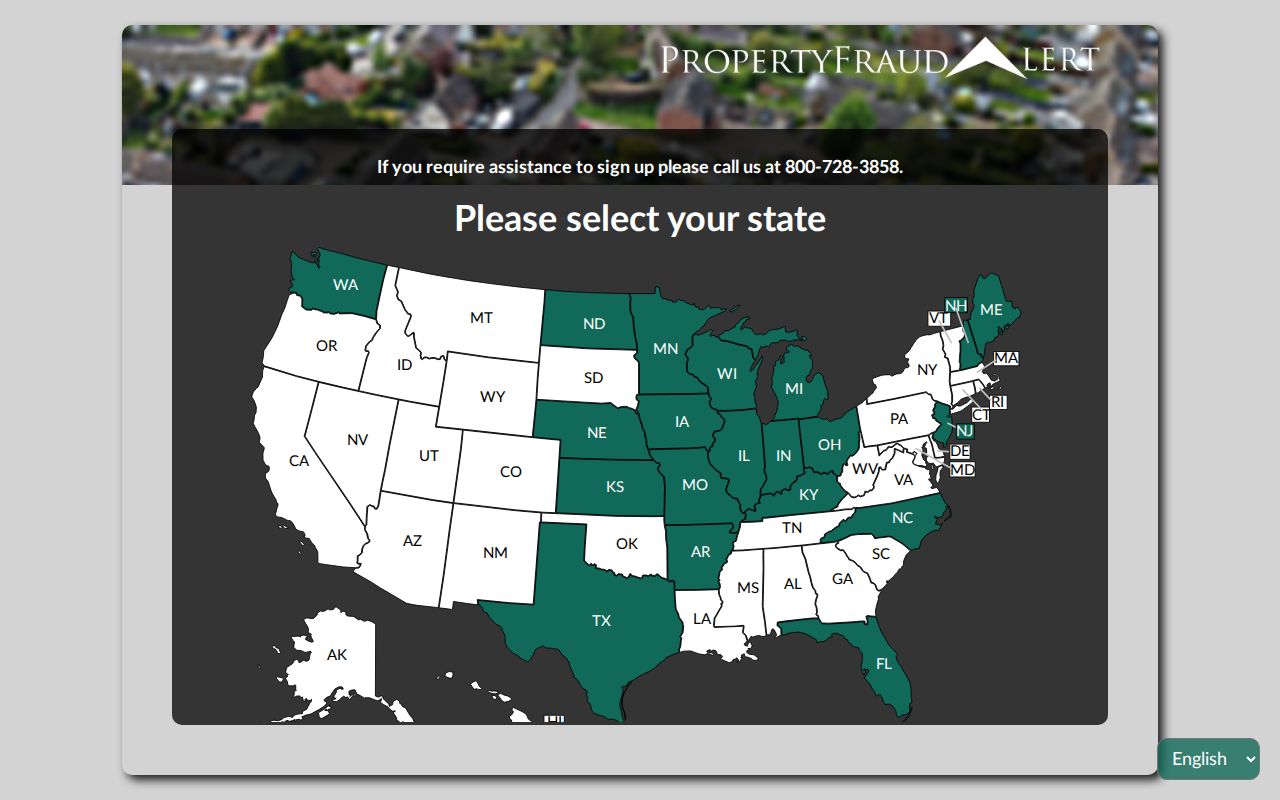
The sign-up page is the Property Fraud Alert service linked by the Jasper County Recorder.
An alert is a watch tool, not a shield. It will not block a filing. It does not confirm ownership. It cannot replace your own review of the deed records. Treat an unexpected notice as a reason to call the Recorder through published channels. Inspect the indexed document yourself.
Scammers sometimes cite a public deed and offer to sell an expensive copy. Check any such solicitation against the county's published copy and certification charges before paying anything.